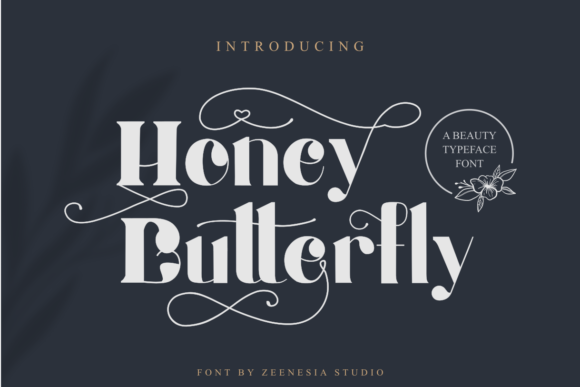
Honey Butterfly: A Unique Display Font for Creative Expression
Honey Butterfly is an incredibly unique and elegant display font that stands out in a crowded typography landscape. Designed with a blend of sophistication and whimsy, it offers a distinctive visual identity that can elevate any creative project. Whether you're designing a logo, crafting a website, or creating promotional materials, Honey Butterfly brings a level of artistry that few other fonts can match.
What Makes Honey Butterfly Distinct?
Honey Butterfly is not just another display font; it's a carefully crafted typeface that combines elements of script and decorative styles. The name itself hints at its essence—like the delicate wings of a butterfly, each character flows with grace and fluidity. This font features soft curves, subtle serifs, and a balanced structure that ensures readability while maintaining an artistic flair.
One of the most notable aspects of Honey Butterfly is its versatility. It works well in both digital and print formats, making it suitable for a wide range of applications. From invitations and branding to packaging and web design, this font adapts seamlessly to various contexts without losing its charm.
Design Characteristics
- Soft Curves: The flowing lines mimic the gentle movement of a butterfly’s wings, giving the font a sense of motion and elegance.
- Subtle Serifs: These add a touch of refinement without overwhelming the overall design.
- Consistent Weight: The uniform thickness of strokes ensures that the font remains legible even at smaller sizes.
- Open Counterforms: The spacious interiors of letters enhance readability and give the font a light, airy feel.
Comparing Honey Butterfly with Similar Fonts
When considering Honey Butterfly, it's helpful to compare it with other display fonts that share similar characteristics. While many fonts offer a whimsical or elegant look, few manage to strike the right balance between style and usability.
Fonts like Bell MT or Garamond are often used for their classic appeal, but they tend to be more formal and less playful than Honey Butterfly. On the other hand, scripts such as Lobster or Kranky are more stylized but may lack the refined structure that Honey Butterfly provides.
Compared to these alternatives, Honey Butterfly offers a middle ground. It retains the creativity and visual interest of a script font while maintaining the clarity and professionalism of a serif typeface. This makes it particularly well-suited for projects that require both aesthetic appeal and functional readability.
Strengths and Tradeoffs
The primary strength of Honey Butterfly lies in its ability to convey a sense of elegance and creativity. Its design allows it to stand out in a way that can draw attention to key messages or brand elements. This makes it ideal for headlines, titles, and other prominent text elements.
However, like many display fonts, Honey Butterfly may not be the best choice for large blocks of body text. Its intricate details can become difficult to read when used in long paragraphs, especially at smaller font sizes. In such cases, pairing it with a more legible sans-serif or serif font would be advisable.
Another consideration is the availability of different weights or variants. While Honey Butterfly may come in multiple styles, it's important to check whether all necessary options are included before committing to its use in a project.
Best-Fit Situations for Honey Butterfly
Honey Butterfly shines in scenarios where a touch of sophistication and uniqueness is desired. Here are some situations where this font may be the right choice:
- Branding and Logos: The font’s elegant appearance makes it perfect for logos that aim to communicate a sense of class and originality.
- Invitations and Event Materials: Whether it's a wedding invitation or a product launch event, Honey Butterfly adds a special touch that can make the design more memorable.
- Web Headers and Titles: As a display font, it works exceptionally well for headers, banners, and other prominent text elements on websites.
- Promotional Materials: From flyers to posters, Honey Butterfly can help create a visually appealing layout that captures attention.
On the flip side, if your project requires a high degree of readability in extended text, or if you're working within a more minimalist or modern design framework, you might want to consider alternative fonts that better align with those needs.
Realistic Examples and Practical Comparisons
Imagine designing a luxury skincare brand’s website. Using Honey Butterfly for the main heading could immediately set a tone of elegance and exclusivity. When paired with a clean sans-serif font for body text, it creates a harmonious balance between style and functionality.
In contrast, for a tech startup focused on innovation and efficiency, a more modern and minimalistic font might be a better fit. While Honey Butterfly could still be used sparingly for call-out quotes or section headings, it wouldn’t be the optimal choice for the primary branding elements.
Another practical example involves event signage. If you're organizing a cultural festival, using Honey Butterfly on banners or directional signs can create a visually engaging environment that reflects the theme of the event.
Decision Factors and Final Considerations
When deciding whether Honey Butterfly is the right font for your project, several factors should be taken into account. First, consider the context in which the font will be used. Is it for a short headline or a long paragraph? Second, evaluate the overall design aesthetic of your project. Does Honey Butterfly complement or clash with the existing visual elements?
Additionally, think about the audience you're targeting. If your audience prefers a more traditional or conservative look, a simpler font might be more appropriate. However, if your goal is to make a bold statement or evoke a sense of creativity, Honey Butterfly can be a powerful tool in your design arsenal.
Ultimately, the decision comes down to how well the font aligns with your specific needs and objectives. Honey Butterfly is an excellent choice for those looking to infuse their designs with a unique and elegant character, but it's important to weigh its strengths against its limitations to ensure it's the best fit for your project.